
Full stack developer, educator & CEO CRIB, LLC
Black History in Tech: David L. Steward and the St. Louis Tech Giant People Sleep On
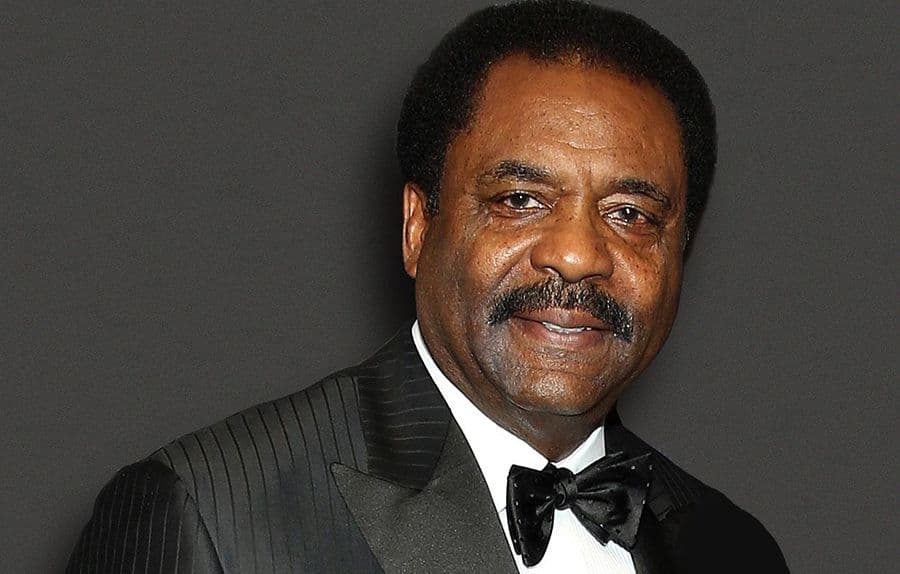
If you’re from St. Louis, you know how our wins get treated: big things happen here, but they don’t always get labeled “big” by outsiders. David L. Steward is one of those St. Louis stories that should be common knowledge—because he helped turn this region into a serious technology hub while building one of the most consequential Black-owned businesses in America.
1) The Missouri roots matter (and so does the era)
Steward was born in Chicago in 1951 and raised in Clinton, Missouri—and he has spoken about his family’s life being shaped by segregation-era barriers, including schooling access in small-town Missouri.
That context isn’t trivia. It explains why his story hits differently: he didn’t come up through a tech pipeline—he came up through a Missouri reality where doors weren’t automatically open.
2) He came to St. Louis and started breaking “first” barriers before WWT even existed
After graduating from Central Missouri State University (now UCM) in 1973, he relocated to St. Louis and began building a career in sales and enterprise relationships.
One of the clearest “Black history in real time” moments: Steward became the first person of color hired by Missouri Pacific Railroad to sell rail services.
Then he leveled up at FedEx, where he was named salesman of the year (1981) and inducted into the FedEx Sales Hall of Fame.
That’s not fluff—those roles taught him the core skill that would later define WWT: how large institutions buy, how contracts are won, and how trust is built at scale.
3) 1990: WWT starts in St. Louis—and the early years were not pretty
Steward co-founded World Wide Technology (WWT) in 1990 in the St. Louis region.
And the “great man” part of the story is that the origin wasn’t glamour—it was pressure. Forbes notes that in the early days he sometimes went without a paycheck, and there’s a documented moment where his car was repossessed from the office parking lot. Steward himself described having to walk out and grab his briefcase like nothing happened.
That’s the real line between legend and “successful.” A lot of people start businesses. Very few keep going when embarrassment is public and the risk is personal.
4) WWT became a giant by living in the “infrastructure lane”
WWT isn’t famous like an app, but it sits where the money and complexity are: enterprise infrastructure—cloud, networking, security, data center buildouts, and large-scale systems integration.
This is important for Black history in tech because it’s not just “we can code too.” It’s: we can own the companies that build and run the digital backbone of modern America.
5) St. Louis receipts: the addresses, the buildings, the campus, the footprint
From a St. Louis perspective, WWT isn’t abstract. It’s physical.
- Global HQ: 1 World Wide Way, Maryland Heights—a real landmark in the Westport area.
- In 2017, WWT opened a new global headquarters in Maryland Heights at Westport Plaza (7 stories, ~208,000 sq ft).
- WWT’s St. Louis Technology Campus became a hub for technical talent and is home to its Advanced Technology Center (ATC)—a lab environment where customers/partners can learn, test, and validate systems before deploying them.
That’s the part outsiders miss: he didn’t build “a tech company that happens to be in St. Louis.” He helped build St. Louis as a place where tech gets built.
6) The scale is not normal—especially for a private company headquartered here
WWT’s public-facing numbers consistently place it in the $20B annual revenue tier in recent years. Wikipedia and WWT’s own releases also cite 12,000+ employees as of 2025.
And as of 2025, Forbes lists Steward among the world’s Black billionaires (with estimates around $11.4B in spring 2025), while another Forbes item in late 2025 placed him higher. (Exact net worth moves with valuations and list timing—what doesn’t move is that he’s in the very top tier.)
7) The civic St. Louis connection is documented, not vibes
St. Louis has a specific definition of “made it”: you didn’t just win—you came back and carried people.
- The Stewards made a widely reported $1 million annual pledge to the United Way of Greater St. Louis, noted as a historic level of giving in the region.
- Washington University in St. Louis recognized David and Thelma Steward with a St. Louis Community Service Award (2008), explicitly citing their civic and philanthropic engagement in the region.
This is part of why people in St. Louis talk about Steward differently: he’s not just “rich.” He’s embedded.
A quick timeline recap
- 1951: Born in Chicago; raised in Clinton, Missouri
- 1973: Graduates Central Missouri State University; relocates to St. Louis
- 1970s: Breaks barrier at Missouri Pacific Railroad (first person of color hired to sell rail services)
- 1981: FedEx salesman of the year; inducted into Sales Hall of Fame
- 1990: Co-founds World Wide Technology in St. Louis
- Early 1990s: Documented “no paycheck” period + repossession incident
- 2017: Opens new global HQ in Maryland Heights/Westport
- 2024–2025: WWT cited at $20B+ revenue and 12,000+ employees; Steward’s wealth estimated >$10B